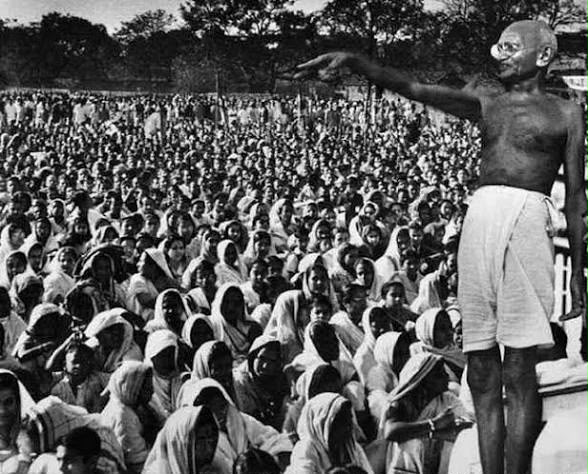
On the evening of August 8, 1942, at Bombay's Gowalia Tank Maidan, today's August Kranti Maidan, the Indian freedom struggle crossed a moral and political threshold. The All India Congress Committee adopted the Quit India Resolution, demanding an immediate end to British rule and authorising a campaign of mass civil disobedience. Mahatma Gandhi's stirring exhortation, "Do or Die," was not just a slogan of defiance, but an appeal to a nation exhausted by colonial subjugation to recognise that freedom could no longer remain contingent upon imperial calculations. Within hours, almost the entire leadership, including Gandhi, Nehru, Vallabhbhai Patel, Maulana Azad and others, had been arrested. The British administration believed that decapitating the movement would extinguish resistance. Instead, it ignited one of the broadest, most spontaneous and decentralised uprisings in modern Indian history.
The Quit India Movement, thus, occupies a distinctive place in India's freedom struggle. It was neither the first nor the most immediately successful campaign against colonial rule. The Non-Cooperation Movement of 1920 and the Civil Disobedience Movement of 1930 had mobilised millions before it. Quit India itself was brutally crushed, with thousands imprisoned, hundreds killed in police firing and martial repression imposed across large parts of the country. Yet its historical significance lies not in its immediate achievements but in the irreversible psychological transformation it produced. After August 1942, the British Empire understood that India could no longer be governed through consent, compromise or coercion. The administrative machinery survived, but its legitimacy had collapsed beyond repair.
The Quit India Movement emerged amid the upheaval of the Second World War. Britain had unilaterally involved India in the war, while inflation, shortages, censorship and economic hardship fuelled public anger. The failure of the Cripps Mission in 1942 further shattered hopes of constitutional progress. Although Sir Stafford Cripps offered Dominion status after the war, the proposal retained British control during the conflict and allowed provinces to opt out of a future Indian Union. Congress rejected it as inadequate, the Muslim League found it insufficient for their own political objectives, and the collapse of talks convinced many nationalists that Britain was postponing, not conceding, Indian independence.
Unlike earlier movements, the Quit India Movement swiftly became a decentralised mass uprising. With the arrest of national leaders, ordinary Indians sustained the struggle. Students boycotted classes, workers organised strikes, peasants disrupted communications, and underground networks circulated newspapers, pamphlets and radio broadcasts. Leaders such as Aruna Asaf Ali, Lohia, Usha Mehta, Sucheta Kripalani and Jayaprakash Narayan embodied this civic-led resistance. Usha Mehta's clandestine Congress Radio defied colonial censorship, while local committees across the country devised protests suited to their circumstances.
Perhaps the movement's most overlooked contribution was proving that democratic politics cannot be extinguished through repression alone. Even as the British dismantled organisations, censored newspapers and banned public assemblies, political communication survived through underground literature, local networks and oral transmission. Despite overwhelming military superiority, the colonial state could not monopolise public opinion. The lesson endures: states may regulate institutions, but they cannot indefinitely suppress aspirations for accountable governance once they acquire moral legitimacy.
The movement also witnessed the emergence of parallel governments in several regions. The Prati Sarkar in Satara, the Tamralipta National Government in Bengal and the Ballia administration in present-day Uttar Pradesh represented attempts, however temporary, to replace colonial authority with indigenous institutions. These experiments were uneven in scale and duration, yet they revealed that Indian nationalism was not merely oppositional. It also possessed an imagination for governance. Even before independence, local actors were attempting to administer justice, collect revenue, organise welfare and maintain public order outside colonial structures. These episodes challenge simplistic narratives that portray the freedom struggle solely as protest rather than as an evolving exercise in democratic statecraft.
Modern scholarship has moved beyond elite narratives to highlight the role of women, workers, peasants, students, teachers, railway employees, tribal communities and countless unnamed volunteers. Women led, organised and carried messages despite severe repression, while rural India became an active force in the struggle. Yet Quit India was not universally supported: the Communist Party of India opposed it after the Soviet Union joined the Allied war effort, the Muslim League pursued constitutional negotiations and Pakistan, and several princely states remained outside its reach. These differences show that India's freedom struggle was politically diverse, with democracy emerging through contestation as much as consensus.
Its enduring legacy lies in the constitutional order independent India created. Rejecting colonial notions of authority, the Constitution vested sovereignty in the people through universal adult franchise, fundamental rights, parliamentary accountability, judicial review and federalism. If Quit India sought freedom from foreign rule, the Republic sought freedom from arbitrary power itself. As India approaches the centenary decade of independence, the meaning of August 8th extends beyond ceremonial remembrance. Contemporary debates surrounding institutional autonomy, civil liberties, freedom of expression, digital surveillance, federal relations and the accountability of public authority increasingly compel reflection on the values that animated the freedom struggle. Democracies do not weaken only through dramatic ruptures, but also when dissent becomes suspect, when public institutions lose credibility or when constitutional safeguards are viewed as administrative inconveniences rather than democratic necessities. The lesson of 1942 is not that every disagreement with the government is comparable to the freedom struggle. It is that democratic legitimacy rests on preserving space for peaceful dissent, independent institutions and an informed citizenry.
Equally significant was the movement's emphasis on civic responsibility. Gandhi's appeal was directed not only against imperial rule but also towards Indians themselves, insisting that freedom required moral discipline, participation and social solidarity. These remain unfinished tasks. Democracy cannot be sustained by elections alone if trust declines, polarisation deepens, or constitutional values are neglected. Citizens inherit not only the rights won by earlier generations but also the responsibility to safeguard the institutions that protect them.
History is rarely shaped by immediate outcomes. In August 1942, Britain seemed militarily unassailable, and the movement appeared crushed. Yet within five years of the movement, India became independent. Britain's withdrawal resulted from multiple forces—the economic strain of the Second World War, changing international opinion, the INA trials, the Royal Indian Navy mutiny, anti-colonial movements and constitutional negotiations—but Quit India irreversibly undermined the moral legitimacy of colonial rule. Its enduring lesson is that nations survive not because governments command obedience, but because citizens believe their institutions deserve allegiance. Every August 8, India commemorates not just an act of resistance, but the enduring democratic principle that all authority must remain answerable to the people.
About the Author : Amal Chandra is an author, political analyst, and columnist. His debut book, The Essential, featuring a foreword by former Union External Affairs Minister Adv. Salman Khurshid, was launched by Dr. Shashi Tharoor, with whom he works on public affairs, alongside V.D. Satheesan, the current Chief Minister of Kerala. Follow @ens_socialis.
Join the Conversation